Most pet owners know their dog or cat needs vaccines, regular checkups, and a good diet. But dental disease? That one tends to slip through the cracks. You might notice a bit of bad breath and chalk it up to something your pet ate. The truth is, dental disease in pets is one of the most common and most underestimated health problems veterinarians see every single day. At Alameda Veterinary Clinic in Lakewood, CO, we see pets at every stage of this condition, and we want you to understand what is really happening inside your pet’s mouth before it becomes a much bigger problem. This guide covers the causes, warning signs, treatment options, and what you can do to protect your pet starting today.
What Is Pet Dental Disease and Why Is It So Common?
Periodontal disease is the clinical term for the infection and inflammation that affects the gums and structures supporting your pet’s teeth. It starts simply enough: bacteria in the mouth form a soft film called plaque on the tooth surface. If that plaque is not removed, it hardens into tartar (also called calculus) within a matter of days. Tartar buildup triggers the gums to become red, swollen, and irritated, a condition known as gingivitis.
Left untreated, gingivitis progresses into full periodontal disease, where the infection spreads below the gumline, destroying the bone and tissue that hold teeth in place.
Here is the part most pet owners do not expect: by the time your dog or cat is three years old, there is an 80% chance they already have some form of dental disease. Small breeds and flat-faced breeds (like Pugs and Persian cats) are especially prone to it because their teeth are crowded together, which creates more surface area for bacteria to grow.
The real concern is not just tooth loss. The bacteria from an infected mouth can travel through the bloodstream and quietly cause damage to the heart, kidneys, and liver over time. Dental disease is not just a mouth problem. It is a whole-body problem.
Warning Signs Your Pet May Have Dental Disease
Pets are remarkably good at hiding discomfort. By the time you notice something is off, the problem has often been developing for months. Knowing what to look for makes a real difference.
Watch for these signs:
- Persistent bad breath that is noticeably worse than normal “dog breath.”
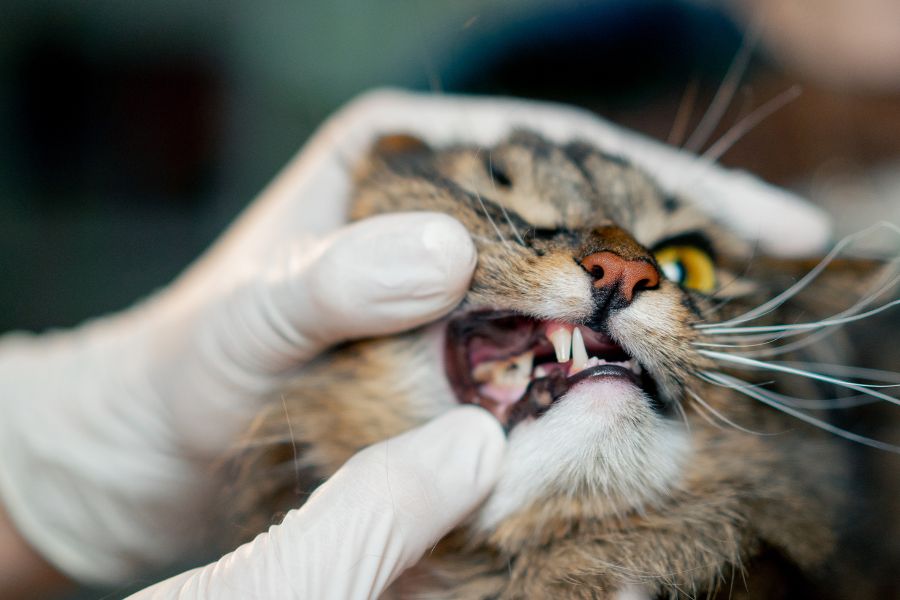
- Yellow or brown buildup along the gumline, especially on the back teeth
- Red, swollen, or bleeding gums when your pet chews or you touch the area
- Dropping food, chewing on one side, or showing reluctance to eat hard kibble
- Pawing at the mouth or rubbing the face against furniture
- Drooling more than usual, sometimes with a slight blood tinge
- Loose or missing teeth in an adult pet
A real-life scenario worth knowing: a pet owner brought in their seven-year-old Labrador because he had stopped finishing his meals. The dog seemed fine otherwise, happy and energetic. A full oral exam revealed three fractured teeth and significant bone loss from advanced periodontal disease. He had been in pain for a long time without showing any obvious signs at home. That is how quietly this condition can progress.
How Veterinarians Diagnose and Treat Dental Disease?
Diagnosing pet dental disease goes beyond a quick look in the mouth. A thorough oral health evaluation requires your pet to be under general anesthesia. This is the only safe and accurate way to examine every tooth, probe below the gumline, and take dental X-rays.
Dental X-rays are essential. Nearly 60% of a tooth’s structure sits below the gumline, completely hidden from view. Without X-rays, significant disease and bone loss can be missed entirely.
Treatment depends on how advanced the disease is:
- Professional dental cleaning (dental prophylaxis): Scaling removes tartar above and below the gumline, followed by polishing to smooth the tooth surface and slow future buildup. This is appropriate for early to moderate disease.
- Tooth extractions: When a tooth is too damaged or infected to save, removal is the kindest option. Most pets recover quickly and eat normally within a day or two.
- Oral surgery: For more complex cases involving jawbone loss or oral masses, surgical intervention may be needed.
After treatment, your veterinarian will put together a home care plan to help you maintain your pet’s oral health between professional cleanings.
What Pet Owners Can Do at Home?
Professional veterinary dental cleaning handles what has already built up. Home care is what slows the buildup from coming back. Think of it the same way you think about your own dental routine: the dentist handles the deep clean, but you still brush every day.
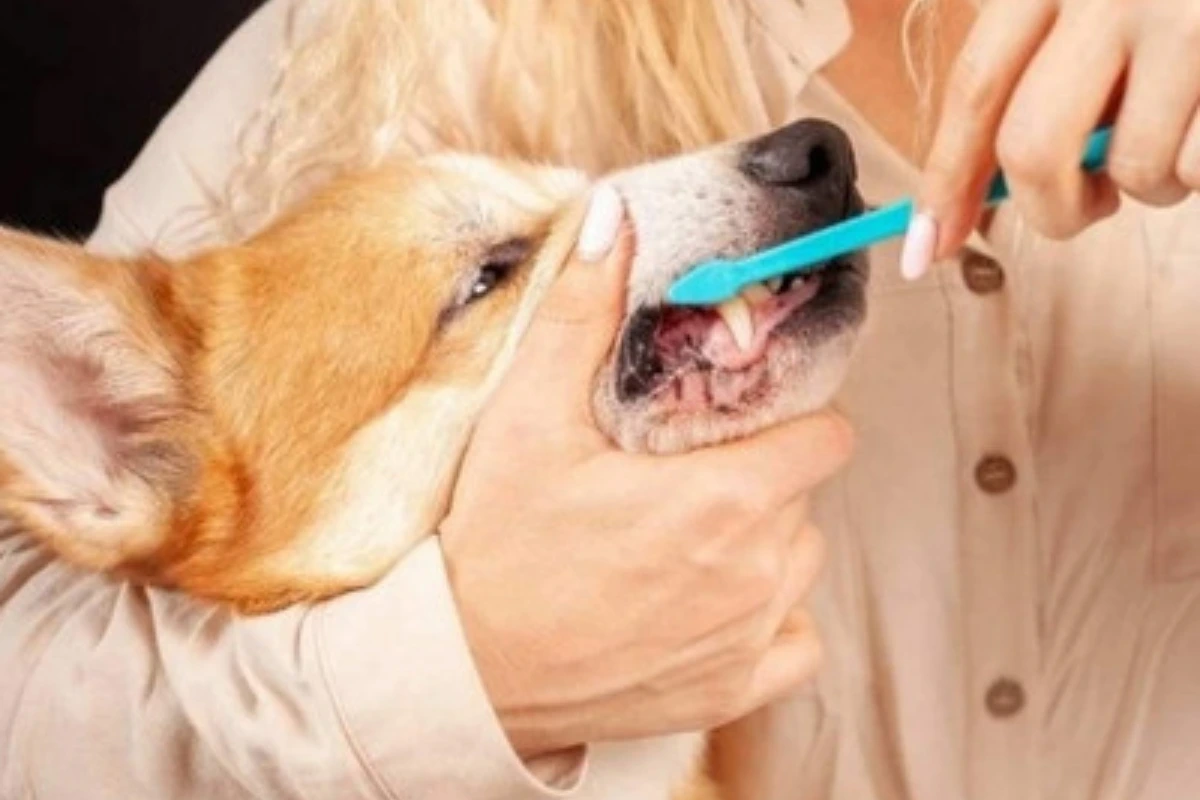
Toothbrushing is the most effective home care option. Use a soft-bristled pet toothbrush and veterinary-approved toothpaste only. Human toothpaste contains xylitol and fluoride, both of which are toxic to pets.
If your pet will not tolerate a toothbrush, there are good alternatives:
- Dental chews and treats that carry the Veterinary Oral Health Council (VOHC) seal of approval
- Water additives that help reduce bacterial load in the mouth
- Dental wipes for pets who dislike brushing but will tolerate gentle rubbing along the gumline
- Prescription dental diets that are formulated to reduce plaque mechanically as your pet chews
Daily brushing is the gold standard, but even three to four times a week makes a meaningful difference. Any effort is better than none.
What to Expect During a Dental Cleaning at Alameda Veterinary Clinic?
If your pet has been scheduled for a professional teeth cleaning for pets, knowing what the process looks like can ease any worry you might have about the procedure.
Here is how a typical dental visit looks at our clinic:
Before the procedure: Your pet will have a pre-anesthetic exam and, in most cases, pre-anesthetic blood work to confirm they are healthy enough for anesthesia. You will be asked to withhold food the night before.
During the procedure: Once your pet is safely under anesthesia and monitored, the veterinary team will perform a full oral exam, take dental X-rays, scale and polish each tooth, probe the gumline for pockets of infection, and document any concerning findings. If extractions or other treatments are needed, those are handled in the same appointment when possible.
After the procedure, Most pets go home the same day. They may be a little groggy from anesthesia, but are typically back to their normal selves the next morning. Your veterinarian will walk you through any aftercare instructions before you leave.
The goal is always to make the experience as smooth as possible for your pet and to send you home with a clear picture of their oral health.
How to Know If Your Pet Needs a Dental Evaluation?
You do not have to wait until something looks obviously wrong to schedule a dental checkup. In fact, the best time to act is before serious disease sets in.
Your pet should be seen for a dental evaluation if:
- They have not had a professional cleaning in more than a year
- You notice any of the warning signs listed earlier in this article
- Your veterinarian flagged early tartar buildup at your pet’s last wellness exam
- Your pet is over five years old and has never had a dental cleaning
Some pets, particularly small breeds and older cats, may need professional cleanings once or even twice a year. Your veterinarian can help you find a schedule that fits your pet’s specific needs and risk factors.
Dental disease does not slow down on its own. Tartar keeps building, gum tissue keeps breaking down, and the bacteria keep spreading. The earlier you address it, the more teeth your pet gets to keep, and the better their overall health tends to be.
Why Pet Owners in Lakewood Should Seek Dental Care?
Oral health is one of the areas where we see the biggest difference in a pet’s quality of life after treatment. Dogs who were hesitant to eat hard food become enthusiastic about meals again. Cats who had been withdrawn and quiet become more playful and affectionate. Pain changes behavior, and removing that source of pain changes everything.
At Alameda Veterinary Clinic, dental care is approached as a core part of every pet’s overall wellness, not an optional add-on. The team has experience working with pets at every stage of dental disease, from mild tartar buildup in young dogs to advanced periodontal cases in senior cats. Every dental procedure is performed with full monitoring, dental X-rays, and individualized care so that your pet is looked after from the moment they arrive to the moment they go home with you.
Pet owners throughout the Lakewood area choose our clinic because they want a team that takes dental disease seriously and explains everything clearly so they can make confident decisions for their animals.
Conclusion
Dental disease is one of the most common health conditions affecting pets, and one of the most preventable. The bacteria behind it do not stay in the mouth. Over time, they can quietly affect your pet’s heart, kidneys, and liver. Catching it early, staying consistent with home care, and scheduling regular professional pet dental cleanings are the three things that make the biggest difference in your pet’s long-term health and comfort.
At Alameda Veterinary Clinic in Lakewood, CO, the team is ready to help you get your pet’s oral health on track. Whether it is time for their first cleaning or you have noticed a few warning signs you want checked out, do not put it off. Call us today to schedule a dental evaluation and give your pet the relief they deserve.
Frequently Asked Questions
Q1: What is dental disease in pets?
Ans: Dental disease in pets refers to the infection and breakdown of the gums, teeth, and bone caused by bacterial buildup in the mouth. It begins as plaque, hardens into tartar, and progresses to periodontal disease if left untreated. It is the most common health problem diagnosed in dogs and cats over the age of three.
Q2: How can I tell if my dog or cat has dental disease?
Ans: Common signs include persistent bad breath, yellow or brown buildup on the teeth, red or swollen gums, reluctance to eat hard food, drooling, and pawing at the mouth. Because pets hide pain well, some animals show no obvious symptoms even when the disease is advanced, which is why regular veterinary oral exams are so important.
Q3: How is pet dental disease treated at a veterinary clinic?
Ans: Treatment involves a professional dental cleaning performed under general anesthesia, which includes scaling, polishing, full-mouth dental X-rays, and a complete oral exam. Severely damaged or infected teeth may need to be extracted. After the procedure, your veterinarian will recommend a home care routine to maintain your pet’s oral health.
Q4: How much does a pet dental cleaning cost, and how often does my pet need one?
Ans: The cost of a professional teeth cleaning for pets varies depending on the extent of disease, whether extractions are needed, and your geographic area. Most healthy adult pets benefit from a professional cleaning once a year. Small breeds, senior pets, and those with a history of dental disease may need cleanings every six months. Your veterinarian can help you determine the right schedule.
Q5: When should I take my pet to the vet for dental concerns?
Ans: You should schedule a dental evaluation if your pet has bad breath that seems worse than usual, visible tartar buildup, red or bleeding gums, difficulty chewing, or has not had a professional cleaning in over a year. If your pet stops eating, shows sudden behavior changes, or you notice a loose tooth, contact your veterinarian promptly, as these may indicate a more urgent dental issue.
Related Articles