What Should You Do If Your Pet Swallows a Halloween Decoration?
If your pet swallows a Halloween decoration, contact your veterinarian for advice, even if your pet seems fine at first. Small objects may pass through the digestive tract, but some can cause choking, internal injury, or an intestinal blockage. If your pet is struggling to breathe, repeatedly retching, collapsing, or showing severe distress, seek urgent veterinary care immediately.
Halloween decorations can look like toys to curious dogs and cats. Plastic spiders, fake cobwebs, ribbons, foam shapes, and small decorative pieces may be tempting to chew or bat around. A pet might swallow an item while playing, exploring a room, or searching for food near a decoration.
At Alameda Veterinary Clinic in Lakewood, CO, we encourage pet owners to take possible foreign-object ingestion seriously. The risk depends on what was swallowed, its size and shape, and your pet’s size and health. Knowing which decorations can be dangerous, what symptoms to watch for, and how to respond can help you make safer decisions during Halloween.
Which Halloween Decorations Can Be Dangerous for Pets?
Many Halloween decorations can become hazards when pets chew them or swallow loose pieces. Some items may cause irritation or choking, while others can become trapped in the stomach or intestines. Long, string-like materials are particularly concerning because they may damage the digestive tract.
Pets may be attracted to decorations that move, dangle, sparkle, or make noise. Puppies and kittens often explore with their mouths, while adult pets may chew objects when bored or excited. Even decorations placed on a table can fall to the floor and become accessible.
Halloween items to keep away from pets
| Decoration | Potential risk |
|---|---|
| Fake cobwebs and synthetic spider silk | May become tangled or swallowed, potentially causing digestive problems or blockage. |
| Ribbons, string, and hanging garlands | Can act as linear foreign bodies and damage the intestines if swallowed. |
| Plastic spiders, bats, and small insects | May cause choking or digestive blockage, depending on size and shape. |
| Foam pumpkins and decorative shapes | Pieces may break off and become lodged in the digestive tract. |
| Small plastic bones, fangs, and costume accessories | May be swallowed and cause choking or blockage. |
| Glow sticks and light-up decorations | Chewing can release irritating contents or expose pets to small parts and batteries. |
| Electrical cords and battery compartments | Chewing may cause electrical injury, while swallowed batteries can cause serious internal damage. |
| Artificial leaves and small decorative plants | Swallowed material may irritate the digestive tract or contribute to a blockage. |
The danger is not always obvious from an item’s appearance. A soft decoration can still create problems if swallowed, and a small object may be large enough to obstruct the digestive tract of a small dog or cat.
Keep decorations in closed storage when they are not in use. Inspect your home regularly during Halloween week, especially after children finish decorating or playing with craft materials.
What Are the Signs That a Pet Has Swallowed a Decoration?
Signs depend on the item swallowed and where it is in the digestive tract. Some pets develop symptoms quickly, while others may appear normal for a period before problems become noticeable. Do not assume that your pet is safe simply because they are still eating or playing.
Warning signs to watch for
- Vomiting or repeated attempts to vomit
- Drooling, gagging, coughing, or difficulty swallowing
- Reduced appetite or refusal to eat
- Unusual tiredness or weakness
- Abdominal discomfort, a tense belly, or a hunched posture
- Diarrhea, constipation, or straining to pass stool
- Restlessness, hiding, or unusual behavior
- Difficulty passing stool or repeated unsuccessful attempts
A blockage may prevent food and fluids from moving normally through the digestive tract. This can lead to vomiting, dehydration, pain, and worsening weakness. In some cases, the problem may become serious before the signs are obvious.
If your pet is choking, struggling to breathe, collapsing, or showing severe distress, seek urgent veterinary care immediately. Do not put your fingers deep into your pet’s mouth to search for an object, as you may push it farther back or get bitten.
If you saw your pet swallow a decoration, call your veterinarian even if no symptoms have appeared. Early advice may help determine whether your pet needs an examination, imaging, or another form of care.
What Should You Do Immediately After Your Pet Swallows a Halloween Decoration?
Stay calm, remove any remaining pieces from your pet’s reach, and contact a veterinarian. If possible, keep the remaining decoration or its packaging so you can describe the material, size, shape, and any small parts. Do not wait for symptoms to develop before asking for advice.
The safest next step depends on what your pet swallowed. Some small, smooth objects may pass without causing harm, while sharp items, string, batteries, and larger objects can be much more dangerous. A veterinarian can help assess the risk based on the details you provide.
Follow these steps
- Prevent further access. Move your pet away from the decoration and collect any loose pieces.
- Identify the item. Note its approximate size, shape, material, and whether any part is missing.
- Record the timing. Tell your veterinarian when the swallowing may have happened.
- Watch for symptoms. Note vomiting, drooling, appetite changes, abdominal discomfort, or unusual behavior.
- Follow veterinary instructions. Your veterinarian may recommend an examination or other steps based on the suspected object.
- Bring relevant information. Take a similar decoration, a photo, or the product packaging if it is safe and practical to do so.
What should you avoid doing?
Do not try to make your pet vomit unless a veterinarian specifically instructs you to do so. Bringing an object back up can cause further injury, particularly if it is sharp, large, or made of a material that could become lodged. Do not give oil, laxatives, human medication, or home remedies to help the object pass.
If your pet swallowed string, ribbon, or fake cobweb material, never pull on anything hanging from the mouth or anus. Pulling a linear object can injure the digestive tract. Seek veterinary advice promptly.
Batteries, sharp objects, and items that may contain harmful chemicals need especially prompt attention. Tell the veterinary team exactly what you suspect was swallowed so they can advise you on the safest next step.
How Do Veterinarians Check for a Swallowed Halloween Decoration?
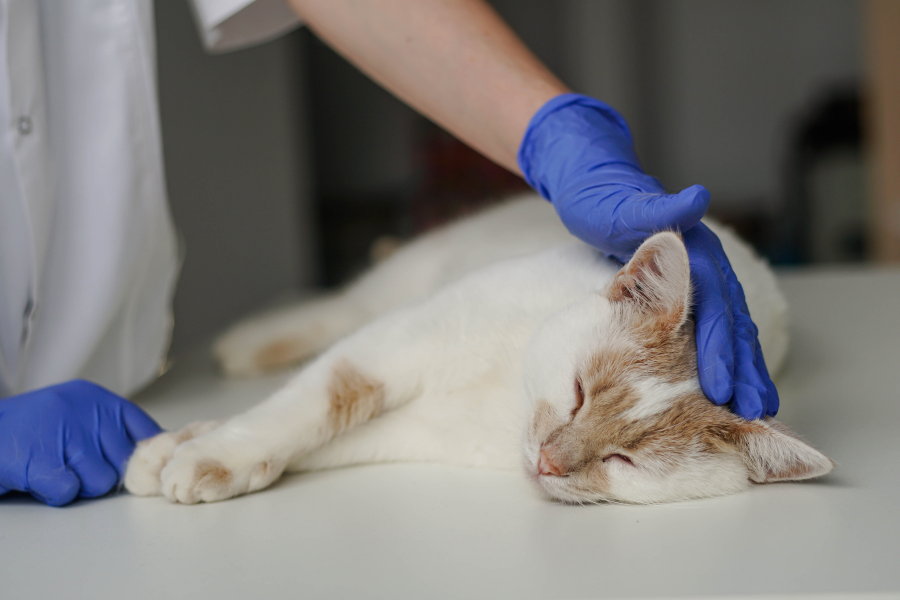
A veterinarian will review what your pet may have swallowed, ask about the timing, and examine your pet for signs of pain, dehydration, or digestive problems. Depending on the object and symptoms, the vet may recommend X-rays, ultrasound, or other diagnostic tests. Some materials are easier to see on imaging than others, so a normal-looking image may not rule out every foreign object.
Treatment depends on the location, size, shape, and type of item. In selected cases, a veterinarian may be able to remove an object from the stomach using an endoscope, a flexible instrument with a camera. Other cases may require surgery, especially if the object causes a blockage or damages the digestive tract.
A hypothetical example
Imagine a cat named Pepper who is found chewing on a decorative ribbon after a Halloween party. The owner notices that a length of ribbon is missing and calls a veterinary clinic instead of waiting to see whether Pepper becomes sick. After reviewing the situation, the veterinary team recommends an assessment and decides what checks are needed based on the suspected amount swallowed.
This is a hypothetical example, not a real patient case. It shows why knowing what is missing from a decoration can be useful, even when a pet has not yet developed symptoms.
After treatment, your veterinarian will explain what to monitor at home and whether follow-up checks are needed. Follow those instructions carefully, and contact the clinic if vomiting, pain, appetite changes, or unusual tiredness develops.
How Can You Make Halloween Decorations Safer for Dogs and Cats?
You do not need to give up Halloween decorations to protect your pet. The key is to choose safer materials, position decorations thoughtfully, and keep small or tempting objects out of reach. Think about how your pet explores the home, including whether they jump onto furniture, chew dangling items, or investigate anything left on the floor.
Pet-friendly decorating tips
- Place small decorations on stable shelves or behind closed doors.
- Avoid fake cobwebs and loose strings in areas your pet can access.
- Secure electrical cords and keep batteries in closed compartments.
- Choose battery-operated lights instead of open flames.
- Store craft supplies, costume accessories, and loose decorations after use.
- Check the floor for fallen pieces after decorating or entertaining.
- Supervise pets around new decorations until you know how they respond.
Be particularly careful with decorations that move in the breeze, flash, or make sounds. These may encourage chasing or chewing. If your pet is very curious, use a closed room or secure barrier to separate them from the most heavily decorated areas.
It also helps to involve children in your safety plan. Ask them to put small decorations away after crafts and to tell an adult if a piece breaks or goes missing. A quick daily check can help you spot hazards before your pet finds them.
What Should You Do if Your Pet Seems Fine After Swallowing an Object?
Even if your pet appears comfortable, contact a veterinarian if you know or suspect that a decoration was swallowed. Some foreign objects cause delayed symptoms, and waiting for vomiting or pain can delay needed treatment. Your veterinarian can help determine whether monitoring is appropriate or whether your pet needs an examination.
Do not try to judge the risk by the size of the object alone. A long piece of ribbon may create a different risk from a small, smooth plastic piece. A battery or sharp decoration may need prompt assessment even if your pet is behaving normally.
If your veterinarian recommends home monitoring, ask which symptoms should prompt another call and how long you should watch for changes. Keep your pet away from additional decorations, maintain their normal routine as directed, and check that they are eating, drinking, and passing stool as expected.
Contact your veterinarian promptly if you notice vomiting, a reduced appetite, abdominal pain, unusual tiredness, or changes in bowel movements. Seek urgent veterinary care if your pet becomes severely weak, collapses, struggles to breathe, or shows signs of intense pain.
Conclusion
Halloween decorations can make your home festive, but loose strings, fake cobwebs, small plastic pieces, batteries, and other items may be dangerous if swallowed. Keep decorations out of reach, check for missing pieces, and supervise curious pets around new displays. If you suspect your pet has swallowed an object, contact a Lakewood veterinarian rather than trying home remedies or waiting for symptoms. Watch for vomiting, appetite changes, abdominal discomfort, and unusual tiredness, and seek urgent veterinary care for severe signs. Alameda Veterinary Clinic in Lakewood, CO, encourages pet owners to take possible foreign-object ingestion seriously and ask for guidance when they are unsure what their pet swallowed. A few simple precautions can help keep Halloween enjoyable for the whole household.
FAQs
Q1: What happens if my dog swallows a Halloween decoration?
A: The outcome depends on the item’s size, shape, and material. Some objects may pass through the digestive tract, while others can cause choking, injury, or an intestinal blockage. Contact a veterinarian for advice as soon as you suspect your dog has swallowed a decoration.
Q2: Can fake cobwebs or Halloween string hurt cats?
A: Yes. Fake cobwebs, ribbon, and string can become tangled or cause serious digestive problems if swallowed. Never pull on string that is hanging from your cat’s mouth or anus. Contact a veterinarian promptly if you suspect ingestion.
Q3: What are the signs of an intestinal blockage in pets?
A: Signs may include vomiting, reduced appetite, abdominal pain, tiredness, and difficulty passing stool. Symptoms can vary, and a pet may not show every sign. Seek veterinary advice if your pet may have swallowed a foreign object.
Q4: Should I make my pet vomit after swallowing a Halloween decoration?
A: No, do not try to induce vomiting unless a veterinarian specifically instructs you to do so. Some objects can cause more damage when brought back up. Call your veterinarian and explain what was swallowed.
Q5: Can Alameda Veterinary Clinic help if my pet swallows a Halloween decoration?
A: Alameda Veterinary Clinic can assess your pet’s symptoms and advise you on appropriate next steps. Contact the clinic promptly if you suspect your pet swallowed a decoration, and provide details about the object and when it happened.